Page 2 of 2
Re: An opening question
Posted: Fri May 30, 2014 5:54 am
by HermanHiddema
DrStraw wrote:
Interesting. I have no interest in soccer. I was raised in to watch rugby in Britain and now watch football in the USA. So to me a kick involves an upward motion and the diagram you show is more intuitively a kick than the one on the third line.
AFAIK, in rugby and American football the ball is also generally kicked from the ground? Or if it is a drop kick or punt, at least from close to the ground.
Kicks above your own centre of mass are the domain of martial arts, I would think
Re: An opening question
Posted: Fri May 30, 2014 6:10 am
by DrStraw
HermanHiddema wrote:DrStraw wrote:
Interesting. I have no interest in soccer. I was raised in to watch rugby in Britain and now watch football in the USA. So to me a kick involves an upward motion and the diagram you show is more intuitively a kick than the one on the third line.
AFAIK, in rugby and American football the ball is also generally kicked from the ground? Or if it is a drop kick or punt, at least from close to the ground.
Kicks above your own centre of mass are the domain of martial arts, I would think
Exactly. A kick goes from low to high - 3rd to 4th line.
Re: An opening question
Posted: Fri May 30, 2014 6:34 am
by leichtloeslich
DrStraw wrote:A kick goes from low to high - 3rd to 4th line.
Not if we freeze-frame the second the foot touches the ball (or egg, in case of American football).
In that moment the ball is quite clearly below the kicker. I think it's that image that the term tries to capture.
And if white responds normally with a nobi, then we have an upward motion of the ball (white stone) that was kicked.
I find it a quite intuitive mental image, with the initial hoshi stone being the guy that's going to kick something, the keima approach being a ball placed in front of him, and there we go, he kicks, and, yay, lift-off.
Re: An opening question
Posted: Fri May 30, 2014 6:45 am
by DrStraw
Okay, I give in. I'll just continue to call it kosumitsuke.

Re: An opening question
Posted: Fri May 30, 2014 6:48 am
by tj86430
HermanHiddema wrote:
Kicks above your own centre of mass are the domain of martial arts, I would think

Re: An opening question
Posted: Fri May 30, 2014 6:53 am
by Bill Spight
gostudent wrote:Thank you for the examples of reduction and invasion!
As a beginner, I often struggle on when to invade or when to reduce.
Welcome to the club!

I have lost many games due to weak groups that are not properly taken care of....
Possibly that indicates that you invade too often instead of reducing.
So now whenever I play, I tend to be very cautious when I may create a weak group, and be careful about cutting points. However, that would mean that I easily lose the timing of such opportunities.
Yes, it is easy to play too cautiously and fall behind. OTOH, it is possible to lose because of weak groups that give your opponent opportunities to attack. Go is not easy.
A big part of that is, of course, due to my inaccurate reading -- it is not easy for me to tell if (i) can my group live, and (ii) would I be living too small and giving my opponent an overly strong wall?
What could be good ways to improve on that? Thanks.
There are books that deal with invasion and reduction, but the ones I know of are somewhat above your level. Experience helps. Game reviews help.
Good luck!
Posted: Fri May 30, 2014 12:11 pm
by EdLee
I've always heard of it as a kick (since ~2003, ~2004), and I find the imagery 100% accurate and appropriate:
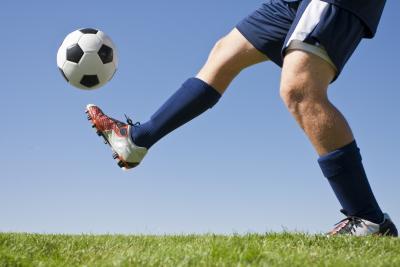
- kick1.jpg (13.5 KiB) Viewed 2142 times
- kick2.jpg (25.48 KiB) Viewed 2142 times

- kick3.jpg (33.04 KiB) Viewed 2142 times
$$B
$$ . . . . . . . . |
$$ . . . . . . . . |
$$ . . . . . . . . |
$$ . . 2 . X . . . |
$$ . . O 1 . . . . |
$$ . . . . . . . . |
$$ . . . . . . . . |
$$ ----------------+
- Click Here To Show Diagram Code
[go]$$B

$$ . . . . . . . . |

$$ . . . . . . . . |

$$ . . . . . . . . |

$$ . . 2 . X . . . |

$$ . . O 1 . . . . |

$$ . . . . . . . . |

$$ . . . . . . . . |

$$ ----------------+[/go]
Re: An opening question
Posted: Thu Jun 05, 2014 11:50 pm
by MagicMagor
You asked for some clarification about the kick and why it is generally considered not a good move, if there is no pincer stone nearby. Since everyone else decided to talk about the name "kick" instead of the actual move i will try to share some light on that position.
I read somewhere a general rule about extending as far away on the third line as a string extends from the edge.
I have never heard about that rule. Do you happen to have a source for this one? It sounds a little strange to me.
The general rule i learned about extension is "length of string + 1". That is from a single stone (length 1) the optimal extension is 2 spaces.
In the diagramm of the kick white as a string of length 2 so his optimal extension would be 3 spaces.
So yes, part of the reason why the kick is considered bad without a pincer stone is that it allows white to make this ideal extension of three spaces along the edge. If black had a pincer already in place (like in a handicap game) the best extension white could make would be 2 spaces, which would mean he is slightly overconcentrated.
However there is a little more than just "white got the ideal extension". Since i'm not that good with the diagramm-code on this board i prepared a little sgf for this.
Re: An opening question
Posted: Fri Jun 06, 2014 4:23 am
by Aidoneus
MagicMagor wrote:I read somewhere a general rule about extending as far away on the third line as a string extends from the edge.
I have never heard about that rule. Do you happen to have a source for this one? It sounds a little strange to me.
The general rule i learned about extension is "length of string + 1". That is from a single stone (length 1) the optimal extension is 2 spaces.
In the diagramm of the kick white as a string of length 2 so his optimal extension would be 3 spaces.
In your example, move 6 (Wk3) is a 3-space extension (string +1 rule as you note) and also a 4-move extension (string up to the 4th line, per Bruce Wilcox). Note that if there was a White stone at O2 the guidelines would not agree. Whether one rule is better than the other, I don't know. Not that any general rule should override consideration of specific game conditions.