Today was another day off. I recently wrote about us still studying quite a lot on free days, and because I had a spur-of-the-moment free day earlier this week, I got up at six this morning and still managed to get in around six more hours of tesuji, life and death and joseki study. That way I didn't feel guilty at all when I left the apartment after lunch and finally went on some proper exploration of the city I've been calling home for the past six weeks.
- wuhan1.jpg (185.87 KiB) Viewed 13100 times
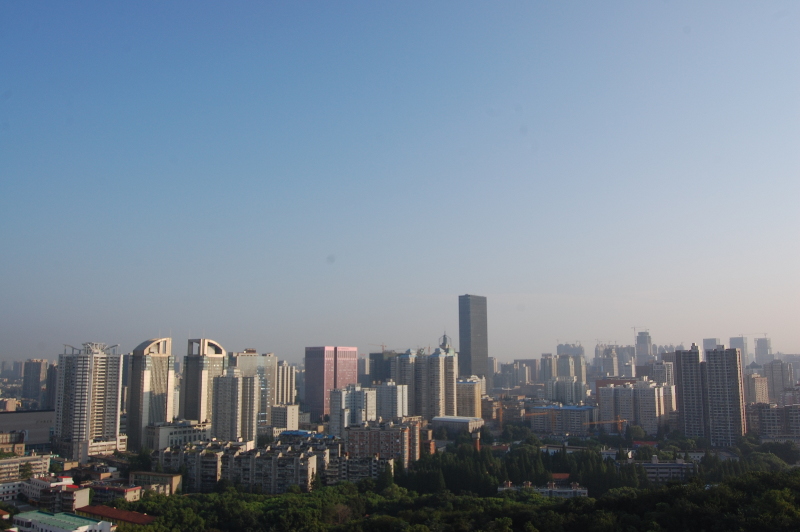
Wuhan is the capital city of Hubei province. Around 10 million people live here. I walked around town, because that is how I prefer to travel, and it's much easier to stop to take pictures of things that interest me. Chinese traffic will get its own instalment in this study journal some time later this week, as I feel its whackiness deserves more than a single paragraph.
As one would expect from a city this size, it has absolutely everything. And then some. In a 5-hour walk I saw luxury department stores, local markets (more on those later), beautiful parks, museums (with art both contemporary and historical), zen temples, an establishment which I'm pretty sure was a bordello, a person making a monkey perform tricks, fortune tellers, a forest with plastic trees (in three different kinds: blossom, summer, autumn colours) that were all fitted with little lights so they light up at night, an army convoy, people gambling in the street, traffic accidents, turtles being sold alive, turtles living out their lives in a temple pond, and the tourist hotspot that is Wuhan's
Yellow Crane Tower.
- wuhan2.jpg (358.48 KiB) Viewed 13100 times
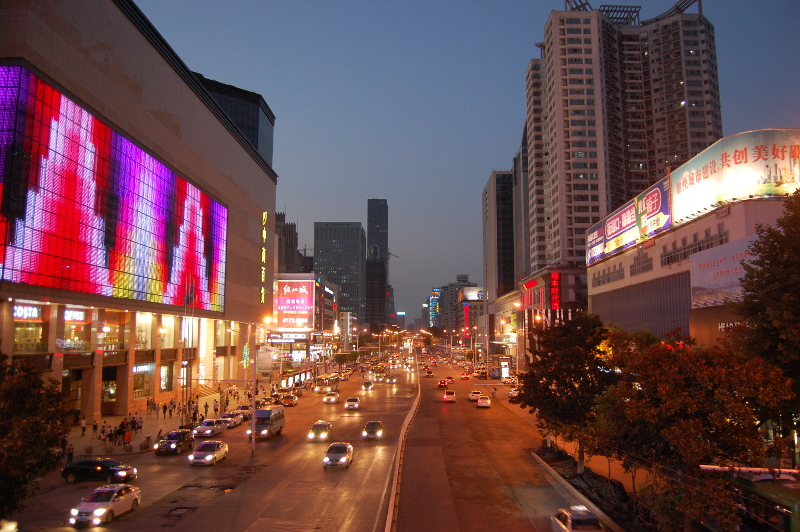
Wuhan doesn't lose out to other places in our westernized world in its search for luxury and extravagance. It's yet more Nike, iPhones and German luxury cars. The city also seems to be growing quite fast, resulting in constant construction of high-rise apartment blocks and mega-malls that seem to advertise their exclusiveness through the size of the LED-screen advertisement above the main entrance.
I haven't really touched upon this before, but studying weiqi is something for the upper middle class here. Extra-curricular activities are a way to further distinguish yourself, and taking lessons from a pro teacher is probably too expensive for a lot of people that live and work here. Even at School Pink Stones, most of the parents pick up their kids in luxury cars.
- wuhan3.jpg (363.66 KiB) Viewed 13100 times
Speaking of wealth: I've come up with a completely unscientific way of measuring how well-off a certain neighbourhood is, which I have given a very scientific-sounding name to make up for its lacking standard in content. I call it the laowai-coefficient. "Laowai" means foreigner, and every time one hears people saying it (pointing at a foreign beard or staring for longer than five seconds also count), the neighbourhood said foreigner is currently in receives an extra point in the category "genuine/local". The current high score stands at 8. This was amassed in under twenty minutes. On my first time travelling in Asia, I was pretty shocked by the level of homogeneity of the population, but this time around I'm more used to it. Captain Obvious remarks I stick out like a sore thumb - often quite literally, as my rather modest height seems quite a bit less modest around here. People that have travelled in Asia will be familiar with the random "Hello"'s, "Hallo's" and awkward handshakes that are a result of just walking down the street, but it's kind of telling I don't think it's weird when total strangers ask if I will pose in a picture with them.
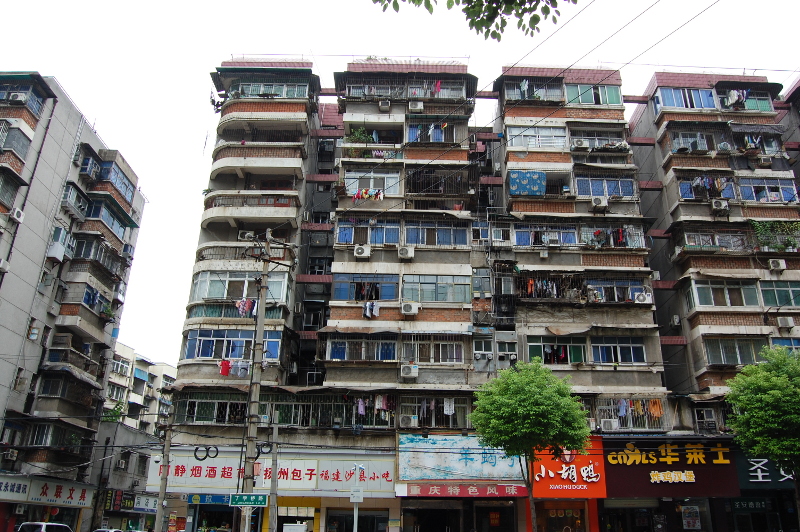
For all its high-street extravaganza, Wuhan has plenty of neighbourhoods were life isn't pure glamour. For many people wages still aren't that high. Speaking of "housing" is a form of hyperbole at times. Hygiene can be quite insufficient in both the personal kind (century-old toilets) and the commercial kind (unrefrigerated meat being assaulted by flies). But then again, none of these are unique to Wuhan. They're probably more a result of the way in which we structured our (global) societies, then they are an expression of local identity.