Physics puzzles
-
Dusk Eagle

- Gosei
- Posts: 1758
- Joined: Tue Apr 20, 2010 4:02 pm
- Rank: 4d
- GD Posts: 0
- Has thanked: 378 times
- Been thanked: 375 times
Re: Physics puzzles
Well, I'm not a physics major, but I just attempted it and
I really don't have a good idea why.
We don't know who we are; we don't know where we are.
Each of us woke up one moment and here we were in the darkness.
We're nameless things with no memory; no knowledge of what went before,
No understanding of what is now, no knowledge of what will be.
Each of us woke up one moment and here we were in the darkness.
We're nameless things with no memory; no knowledge of what went before,
No understanding of what is now, no knowledge of what will be.
-
shapenaji
- Lives in sente
- Posts: 1103
- Joined: Tue Apr 20, 2010 10:58 pm
- Rank: EGF 4d
- GD Posts: 952
- Location: Netherlands
- Has thanked: 407 times
- Been thanked: 422 times
Re: Physics puzzles
SpongeBob wrote:cyclops, I liked your reasoning with the pressure, nice.
Well, it seems my first puzzle was not difficult enough for a smart croud like the one here on L19. Watch out: this one is REALLY cool, but also hard to figure out:
You have a ramp and you have two identical cans of soda. If you let both cans roll down the ramp, they will arive at the bottom of the ramp at the same time. Now if you shake one of the cans directly before the experiment, one of them will be faster than the other. Which one is it and why?
And if you do not believe that: try it out!
Tactics yes, Tact no...
-
HermanHiddema

- Gosei
- Posts: 2011
- Joined: Tue Apr 20, 2010 10:08 am
- Rank: Dutch 4D
- GD Posts: 645
- Universal go server handle: herminator
- Location: Groningen, NL
- Has thanked: 202 times
- Been thanked: 1086 times
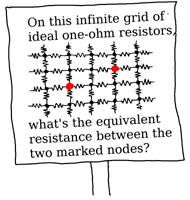
-
Tommie

- Dies with sente
- Posts: 124
- Joined: Wed Apr 21, 2010 3:56 am
- Rank: 3d EGF
- GD Posts: 1700
- Location: still above sea level: http://bit.ly/eQYULx
- Has thanked: 1 time
- Been thanked: 8 times
Re: Physics puzzles - mosquito meets train
O.k.,
here comes my attempt for a nice contribution to this thread:
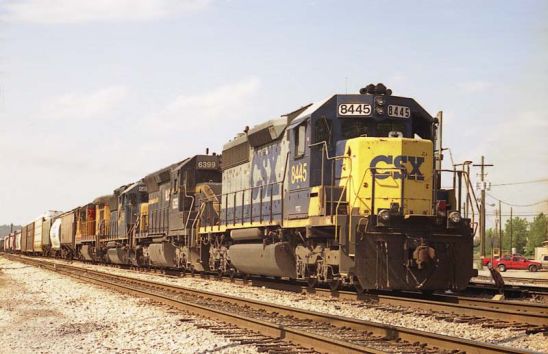

Late in the evening of a warm summer night, into the setting sun,
a very heavy freight train is pulled by a strong and heavy locomotive
onto its way to destination.
A tiny mosquito - may be it was an ephemerid ('one-day-fly' in German) - happened to hoover above the rails - when,
its honeycomb eyes blinded by the evening sun, it turns around and
WANG - its short life found an end.
There was a moment that the train (and perhaps insect?) stood still (had speed zero).
True or not?
_______________________________________________________________________________________________________________________
You know the 'Impulserhaltungssatz' (German for momentum conservation law (theorem) in physics)
momentum (SI unit kg·m/s, or, equivalently, N·s) is the product of the mass and velocity of an object (p = mv).
p = mv = constant,
resp. p1 x m1 = p2 x m2
The law of conservation of momentum states that if a body A of mass m1 and initial velocity u1 collides with a body B of mass m2 and initial velocity u2 , then after collision their final velocities will be v1 and v2 respectively:
(m1 x u1) + (m2 x u2) = (m1 x v1) + (m2 x v2) = constant
The question:
As i) the law is an axiom, hence must be true,
ii) the weight of neither heavy freight train nor tiny insect did change,
iii) speed of insect, above ground was initially about zero,
iv) speed of insect afterwards is = speed of train,
v) there was a time that insect had the speed zero
vi) then momentum = m(insect) x (speed = 0) = 0 =? momentum(train) is zero too?
vii) there is a first moment that insect & train have the same speed,
viii) hence speed v of both train and insect must have been zero at one moment?.
________________________________________________________________________________________________________________
EDITED: insect flies a tiny bit into the direction of the train
here comes my attempt for a nice contribution to this thread:
Late in the evening of a warm summer night, into the setting sun,
a very heavy freight train is pulled by a strong and heavy locomotive
onto its way to destination.
A tiny mosquito - may be it was an ephemerid ('one-day-fly' in German) - happened to hoover above the rails - when,
its honeycomb eyes blinded by the evening sun, it turns around and
WANG - its short life found an end.
There was a moment that the train (and perhaps insect?) stood still (had speed zero).
True or not?
_______________________________________________________________________________________________________________________
You know the 'Impulserhaltungssatz' (German for momentum conservation law (theorem) in physics)
momentum (SI unit kg·m/s, or, equivalently, N·s) is the product of the mass and velocity of an object (p = mv).
p = mv = constant,
resp. p1 x m1 = p2 x m2
The law of conservation of momentum states that if a body A of mass m1 and initial velocity u1 collides with a body B of mass m2 and initial velocity u2 , then after collision their final velocities will be v1 and v2 respectively:
(m1 x u1) + (m2 x u2) = (m1 x v1) + (m2 x v2) = constant
The question:
As i) the law is an axiom, hence must be true,
ii) the weight of neither heavy freight train nor tiny insect did change,
iii) speed of insect, above ground was initially about zero,
iv) speed of insect afterwards is = speed of train,
v) there was a time that insect had the speed zero
vi) then momentum = m(insect) x (speed = 0) = 0 =? momentum(train) is zero too?
vii) there is a first moment that insect & train have the same speed,
viii) hence speed v of both train and insect must have been zero at one moment?.
________________________________________________________________________________________________________________
EDITED: insect flies a tiny bit into the direction of the train
Last edited by Tommie on Wed Nov 24, 2010 7:14 am, edited 1 time in total.
Greetings,
Tommie
3dan EGF (AGA no 13477) || Tommie on KGS: 'June'|| DGS: 'Zhi Laohu' 纸老虎 = 'paper tiger' || Senseis : http://senseis.xmp.net/?tderz ||
ENFP (MBTI) - 'Find your own style within the Fundamentals of Go! '
Tommie
3dan EGF (AGA no 13477) || Tommie on KGS: 'June'|| DGS: 'Zhi Laohu' 纸老虎 = 'paper tiger' || Senseis : http://senseis.xmp.net/?tderz ||
ENFP (MBTI) - 'Find your own style within the Fundamentals of Go! '
-
cyclops

- Lives in sente
- Posts: 801
- Joined: Mon May 10, 2010 3:38 pm
- Rank: KGS 7 kyu forever
- GD Posts: 460
- Location: Amsterdam (NL)
- Has thanked: 353 times
- Been thanked: 107 times
- Contact:
Re: Physics puzzles - mosquito meets train
why hence?Tommie wrote: viii) hence speed v of both train and insect must have been zero at one moment?.
I don't understand the meaning of =? in (vi)
I think I am so I think I am.
-
flOvermind

- Lives with ko
- Posts: 295
- Joined: Wed Apr 21, 2010 3:19 am
- Rank: EGF 4 kyu
- GD Posts: 627
- Location: Linz, Austria
- Has thanked: 21 times
- Been thanked: 43 times

-
cyclops
- Lives in sente
- Posts: 801
- Joined: Mon May 10, 2010 3:38 pm
- Rank: KGS 7 kyu forever
- GD Posts: 460
- Location: Amsterdam (NL)
- Has thanked: 353 times
- Been thanked: 107 times
- Contact:
Re: Physics puzzles
thxSpongeBob wrote:cyclops, I liked your reasoning with the pressure, nice.
Lets assume only frictional loss from the inside. Because the fluid surface tries to remain horizontal the shaken can will have internal friction all the time resulting in a maximum speed.SpongeBob wrote: You have a ramp and you have two identical cans of soda. If you let both cans roll down the ramp, they will arive at the bottom of the ramp at the same time. Now if you shake one of the cans directly before the experiment, one of them will be faster than the other. Which one is it and why?
And if you do not believe that: try it out!
In the unshaken can the fluid's rotation follows the can's rotation and the acceleration goes on forever. So the unshaken can wins in the end.
Another point of view: In the shaken can, because of the drag the gas will get concentrated in the forward direction pushing the center of gravity backwards thus reducing gravity's torque around the turning point/line ( the point/line where ramp and can touch ). Hence less acceleration.
I think I am so I think I am.
-
Tommie
- Dies with sente
- Posts: 124
- Joined: Wed Apr 21, 2010 3:56 am
- Rank: 3d EGF
- GD Posts: 1700
- Location: still above sea level: http://bit.ly/eQYULx
- Has thanked: 1 time
- Been thanked: 8 times
Re: Physics puzzles - mosquito meets train
The meaning of the question mark ? is its basic one,cyclops wrote:why hence?Tommie wrote: viii) hence speed v of both train and insect must have been zero at one moment?.
I don't understand the meaning of =? in (vi)
e.g. transforming an affirmative statement into a question of the type:
This statement, is it true?
I do not know how else to express this in a mathematical formula.
If speed = zero,
then the product of anything times zero must also be = zero
Last edited by Tommie on Wed Nov 24, 2010 7:21 am, edited 1 time in total.
Greetings,
Tommie
3dan EGF (AGA no 13477) || Tommie on KGS: 'June'|| DGS: 'Zhi Laohu' 纸老虎 = 'paper tiger' || Senseis : http://senseis.xmp.net/?tderz ||
ENFP (MBTI) - 'Find your own style within the Fundamentals of Go! '
Tommie
3dan EGF (AGA no 13477) || Tommie on KGS: 'June'|| DGS: 'Zhi Laohu' 纸老虎 = 'paper tiger' || Senseis : http://senseis.xmp.net/?tderz ||
ENFP (MBTI) - 'Find your own style within the Fundamentals of Go! '
-
ethanb
- Lives in gote
- Posts: 355
- Joined: Sat Apr 24, 2010 10:15 am
- Rank: AGA 2d
- GD Posts: 0
- IGS: ethanb
- Has thanked: 52 times
- Been thanked: 43 times
Re: Physics puzzles - mosquito meets train
Shouldn't this be in the "Trolling in field of study" thread?Tommie wrote:If speed = zero,cyclops wrote:why hence?Tommie wrote: viii) hence speed v of both train and insect must have been zero at one moment?.
I don't understand the meaning of =? in (vi)
then the product of anything times zero must also be = zero

Even disregarding flOvermind's (correct, I believe) argument from conservation of momentum, there is also the point that the collision with the insect is partly elastic. I didn't see you mention "a spherical mosquito of uniform density" but you did say that it squished. Therefore the transfer of kinetic energy actually took place over time, not in a single instant. So zero wasn't a factor anyway.
-
Harleqin

- Lives in sente
- Posts: 921
- Joined: Sat Mar 06, 2010 10:31 am
- Rank: German 2 dan
- GD Posts: 0
- Has thanked: 401 times
- Been thanked: 164 times
Re: Physics puzzles
SpongeBob wrote:cyclops, I liked your reasoning with the pressure, nice.
Well, it seems my first puzzle was not difficult enough for a smart croud like the one here on L19. Watch out: this one is REALLY cool, but also hard to figure out:
You have a ramp and you have two identical cans of soda. If you let both cans roll down the ramp, they will arive at the bottom of the ramp at the same time. Now if you shake one of the cans directly before the experiment, one of them will be faster than the other. Which one is it and why?
And if you do not believe that: try it out!
A good system naturally covers all corner cases without further effort.
-
Tommie
- Dies with sente
- Posts: 124
- Joined: Wed Apr 21, 2010 3:56 am
- Rank: 3d EGF
- GD Posts: 1700
- Location: still above sea level: http://bit.ly/eQYULx
- Has thanked: 1 time
- Been thanked: 8 times
Re: Physics puzzles - mosquito meets train
flOvermind wrote:mosquito meets train:
i) If the train is becoming slower (perhaps to zero?) as I and you suggest,
then the train undergoes negative acceleration. What does the 'monotonus' mean & imply?
ii) Is it, can it be zero, e.g. for the tiniest moment?
iii) Why Therefore,? If speed of insect = zero before contact,
then it can be zero because of ii), thus iii) is not true , thus no validity for Therefore,.[/hide]
Gosh, the hide & quote level labels are difficult to postion!
EDITed problem a tiny bit, insofar that insect flies into the direction of the train
Greetings,
Tommie
3dan EGF (AGA no 13477) || Tommie on KGS: 'June'|| DGS: 'Zhi Laohu' 纸老虎 = 'paper tiger' || Senseis : http://senseis.xmp.net/?tderz ||
ENFP (MBTI) - 'Find your own style within the Fundamentals of Go! '
Tommie
3dan EGF (AGA no 13477) || Tommie on KGS: 'June'|| DGS: 'Zhi Laohu' 纸老虎 = 'paper tiger' || Senseis : http://senseis.xmp.net/?tderz ||
ENFP (MBTI) - 'Find your own style within the Fundamentals of Go! '
-
flOvermind
- Lives with ko
- Posts: 295
- Joined: Wed Apr 21, 2010 3:19 am
- Rank: EGF 4 kyu
- GD Posts: 627
- Location: Linz, Austria
- Has thanked: 21 times
- Been thanked: 43 times
Re: Physics puzzles - mosquito meets train
Hehe... I think I know where you're getting at.Tommie wrote:Gosh, the hide & quote level labels are difficult to postion!
EDITed problem a tiny bit, insofar that insect flies into the direction of the train
-
Tommie
- Dies with sente
- Posts: 124
- Joined: Wed Apr 21, 2010 3:56 am
- Rank: 3d EGF
- GD Posts: 1700
- Location: still above sea level: http://bit.ly/eQYULx
- Has thanked: 1 time
- Been thanked: 8 times
Re: Physics puzzles - mosquito meets train
Providing a puzzle implies that some know the answer beforehand, others afterwards.ethanb wrote:
Shouldn't this be in the "Trolling in field of study" thread?
Even disregarding flOvermind's (correct, I believe) argument from conservation of momentum, there is also the point that the collision with the insect is partly elastic. I didn't see you mention "a spherical mosquito of uniform density" but you did say that it squished. Therefore the transfer of kinetic energy actually took place over time, not in a single instant. So zero wasn't a factor anyway.
Being invited to provide and to solve puzzles is thus voluntarily 'trolling' from both sides, active and passive, yes.
It is thus an action enjoyed by all participants, I hope.
If we were physicists and knew all the answers ... but we are not.
From your statement I guess that you want to answers my question with 'No' , is that correct?
Last edited by Tommie on Wed Nov 24, 2010 9:05 am, edited 1 time in total.
Greetings,
Tommie
3dan EGF (AGA no 13477) || Tommie on KGS: 'June'|| DGS: 'Zhi Laohu' 纸老虎 = 'paper tiger' || Senseis : http://senseis.xmp.net/?tderz ||
ENFP (MBTI) - 'Find your own style within the Fundamentals of Go! '
Tommie
3dan EGF (AGA no 13477) || Tommie on KGS: 'June'|| DGS: 'Zhi Laohu' 纸老虎 = 'paper tiger' || Senseis : http://senseis.xmp.net/?tderz ||
ENFP (MBTI) - 'Find your own style within the Fundamentals of Go! '
-
Tommie
- Dies with sente
- Posts: 124
- Joined: Wed Apr 21, 2010 3:56 am
- Rank: 3d EGF
- GD Posts: 1700
- Location: still above sea level: http://bit.ly/eQYULx
- Has thanked: 1 time
- Been thanked: 8 times
Re: Physics puzzles - mosquito meets train
flOvermind wrote:
Greetings,
Tommie
3dan EGF (AGA no 13477) || Tommie on KGS: 'June'|| DGS: 'Zhi Laohu' 纸老虎 = 'paper tiger' || Senseis : http://senseis.xmp.net/?tderz ||
ENFP (MBTI) - 'Find your own style within the Fundamentals of Go! '
Tommie
3dan EGF (AGA no 13477) || Tommie on KGS: 'June'|| DGS: 'Zhi Laohu' 纸老虎 = 'paper tiger' || Senseis : http://senseis.xmp.net/?tderz ||
ENFP (MBTI) - 'Find your own style within the Fundamentals of Go! '